आयुर्वेदिक ज्ञान · Ayurvedic Gyaan
The Science of Life,
Simply Explained
Ayurveda is called “जीवन का विज्ञान” — a system that keeps the body, mind and lifestyle in balance. Here is its wisdom in simple words.
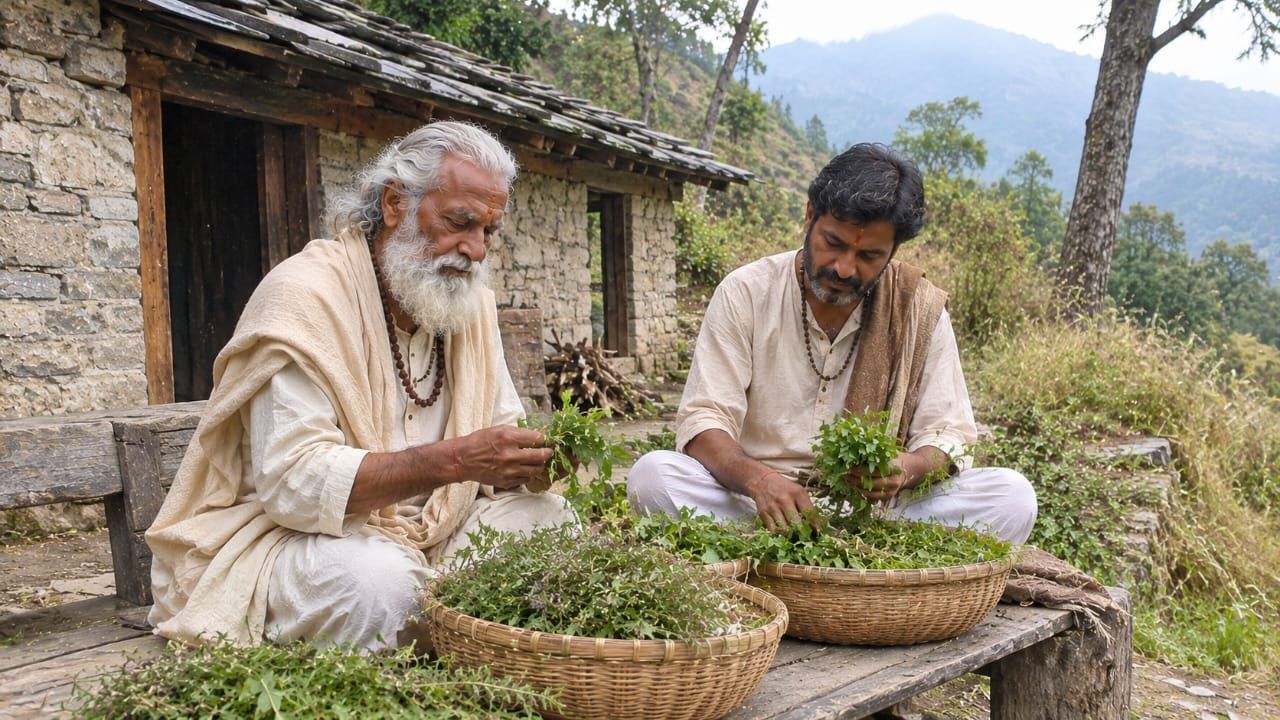
आयुर्वेद के बारे में · About Ayurveda
An Ancient Indian System of Health
Ayurveda's roots lie in the ancient Vedic tradition. Its knowledge has moved forward for thousands of years — first by word of mouth, then in written form.
No single fixed date is accepted for its beginning, but its principles are collected in the great classical texts.
पंचमहाभूत और त्रिदोष · Core Principles
Five Elements Make Three Doshas
Body and nature are both made of five elements — Space, Air, Fire, Water and Earth. From these, three doshas form in the body. Their balance is the foundation of a healthy life.
वात Vata
Akash + Vayu
Movement in the body — breathing, circulation, nerves and thought. When disturbed, it can show as dryness, restlessness and irregularity.
पित्त Pitta
Agni + Jal
Transformation — digestion, metabolism and body heat. When disturbed, it can show as excess heat, acidity and irritation.
कफ Kapha
Jal + Prithvi
Structure and stability — strength, immunity and lubrication. When disturbed, it can show as heaviness and sluggishness.
दिनचर्याDinacharya — Daily Routine
Ayurveda gives great importance to everyday habits — when we wake, eat, work and sleep. A steady daily routine keeps the doshas settled.
- Wake early and start the day calmly
- Eat at regular times, when truly hungry
- Keep time for movement, yoga and pranayama
- Sleep on time for proper rest
ऋतुचर्याRitucharya — Seasonal Routine
As the season changes, our food and habits should change too. Not adjusting to the season is one of the reasons imbalance grows.
देखभाल के साधन · Pathways of Care
How Ayurveda Brings Balance
Ayurveda works by considering a person's nature, daily habits and seasonal changes — and uses these traditional tools.
Balanced Diet
संतुलित आहार
Lifestyle
जीवनशैली
Herbs & Natural Medicines
जड़ी-बूटियाँ
Oil Massage & Panchakarma
तेल मालिश व पंचकर्म
Yoga & Pranayama
योग–प्राणायाम
शरीर में असंतुलन और बीमारियाँ कैसे बनती हैं?
One Small Slip, and Balance Begins to Falter
This is Ayurveda's deepest understanding — illness rarely appears suddenly. It builds up step by step.
- १
Doshas Waver
दोषों का डगमगाना
Vata, Pitta and Kapha move away from balance and the body's rhythm breaks.
- २
‘Ama’ Builds Up
'आम' का जमाव
Weak digestion leaves half-digested matter that causes heaviness and blockage.
- ३
Channels Block
स्रोतों में अवरोध
Pathways of nourishment and energy get blocked; imbalance shows in different parts.
- ४
Habits & Season
आदतों और मौसम की मार
Poor sleep, untimely meals, stress and seasonal mismatch deepen it further.
A routine set right in time, and natural balance, can bring the body back to its rhythm.
अष्टांग आयुर्वेद · The Eight Branches
Ashtanga Ayurveda
कायचिकित्सा
KayachikitsaGeneral health and the body's internal balance.
बाल चिकित्सा
Bala ChikitsaChildren's health, growth and nutrition.
ग्रह चिकित्सा
Graha ChikitsaMental balance and external influences on health.
ऊर्ध्वांग चिकित्सा
Urdhvanga ChikitsaCare of the head, eyes, ears, nose and throat.
शल्य चिकित्सा
Shalya ChikitsaAncient knowledge of surgical and traditional procedures.
दंष्ट्रा चिकित्सा
Damshtra ChikitsaTraditional understanding of toxins and natural reactions.
जरा चिकित्सा
Jara ChikitsaKeeping energy, strength and health with age.
वाजीकरण
VajikaranaVitality, nourishment and overall well-being.
प्रमुख प्राकृतिक घटक और अवधारणाएँ
Key Concepts
- रस, गुण, वीर्य और विपाक Rasa, Guna, Virya & Vipaka
- The taste, nature, potency and post-digestive effect of any herb or food decide how it is used.
- अग्नि और ओज Agni & Ojas
- The power of digestion is Agni; the body's overall vital strength and balance is Ojas.
- स्वस्थवृत्त Swasthavritta
- Rules for keeping a healthy person healthy — not just fixing a problem.
Herbs Common in Traditional Ayurveda
- अश्वगंधाAshwagandha
- तुलसीTulsi
- आंवलाAmla
- त्रिफलाTriphala
- हल्दीHaldi
- गिलोयGiloy
Note: For any health problem or treatment, it is best to consult a qualified Ayurvedic doctor (योग्य आयुर्वेदिक चिकित्सक).